
Knowledge transfer plan template: Boost team resilience
Prevent comprehension loss with our structured knowledge transfer plan template. Transfer key insights for easy team transitions and business continuity.
Get started for freeNo credit card required
Ever faced the frustration of losing vital knowledge when a key team member leaves or a project ends?
Studies show that 42% of companies experience operational disruptions due to poor knowledge transfer. Organizations with structured processes see faster onboarding and fewer errors in transition periods.
Our knowledge transfer plan template turns improvised knowledge sharing into a systematic process. It ensures critical expertise is captured, retained, and transferred efficiently.
Why Traditional Knowledge Transfer Fails (And How to Fix It)
Most teams rely on informal handovers, tribal knowledge, or last-minute documentation, leading to:
- Lost institutional wisdom when employees leave
- Repeated mistakes due to a lack of documented lessons
- Slower productivity as new hires struggle to catch up
A structured knowledge transfer plan ensures:
- Consistent processes for capturing expertise
- Reduced risk of knowledge gaps
- Faster ramp-up for new team members
- Continuous improvement through documented best practices
The Four Pillars of an Effective Knowledge Transfer Plan
Our template organizes knowledge transfer into an actionable, clear workflow:
1. Knowledge Identification & Prioritization
Before transferring knowledge, you must first identify what's critical and who holds it. This stage ensures you focus efforts where they matter most:
- Critical knowledge areas (What must be transferred?)
- Subject Matter Experts (SMEs) (Who holds the knowledge?)
- Risk assessment (What happens if this knowledge is lost?)
- Priority ranking (What should be transferred first?)
Example: A software team identifies that only one engineer understands a legacy system, making this a high-priority transfer.
2. Knowledge Capture & Documentation
Turning tacit knowledge into tangible resources is the foundation of effective transfer. Use these methods to create reusable learning assets:
- Standardized templates for documenting processes
- Recording tools (videos, wikis, SOPs)
- Shadowing & interviews with SMEs
- Checklists & FAQs for quick reference
Best Practice: Use a mix of written guides, video walkthroughs, and hands-on training for best retention.
3. Knowledge Transfer Execution
With knowledge documented, the focus shifts to active transfer. Structured approaches prevent overload and ensure comprehension:
- Structured training sessions (1:1 mentoring, workshops)
- Peer-to-peer learning (cross-training teams)
- Handover timelines (phased vs. immediate)
- Success metrics (How will you measure transfer effectiveness?)
Tip: Schedule knowledge transfer in phases to avoid overwhelming recipients.
4. Verification & Continuous Improvement
Transfer isn’t complete until the knowledge is proven usable. This phase closes gaps and institutionalized learning:
- Validation checks (Can the recipient perform tasks independently?)
- Feedback loops (What gaps remain?)
- Updates & refinements (Keep documentation current)
- Integration into onboarding (Make knowledge transfer repeatable)
Example: A sales team tests new hires with mock client calls to verify product knowledge transfer.
Implementing Your Knowledge Transfer Plan
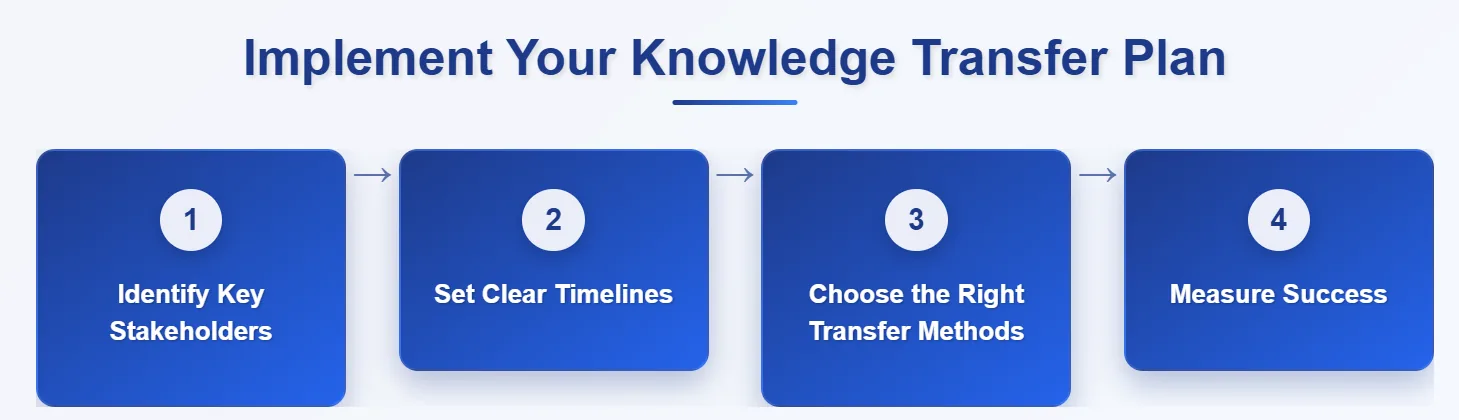
A well-designed plan only delivers results when executed effectively. These actionable steps transform your knowledge transfer strategy from concept to reality, ensuring no critical expertise slips through the cracks during transitions.
Step 1: Identify Key Stakeholders
Successful knowledge transfer begins with mapping your human capital. Clearly defining roles creates accountability and ensures comprehensive coverage.
- Knowledge Owners (Who holds the expertise?)
- Recipients (Who needs to learn?)
- Facilitators (Who oversees the process?)
Step 2: Set Clear Timelines
Time-bound execution prevents knowledge loss. Tailor your schedule based on the urgency and complexity of each transfer.
- Urgent transfers (e.g., departing employee)
- Ongoing transfers (e.g., long-term project handover)
Step 3: Choose the Right Transfer Methods
Match knowledge types with optimal transfer approaches. The right methodology enhances retention and application.
- Shadowing & mentoring (for complex skills)
- Documentation & wikis (for reference material)
- Interactive training (for hands-on learning)
Step 4: Measure Success
Validation completes the transfer cycle. Concrete metrics demonstrate ROI and guide continuous improvement.
- Post-transfer assessments (quizzes, task demonstrations)
- Feedback surveys (What worked? What didn’t?)
- Adjustments for future transfers
Real-World Impact of a Knowledge Transfer Plan
Companies using structured knowledge transfer report benefit from:
- Faster onboarding for new hires
- Reduced operational errors
- Smoother project transitions with no lost knowledge
Get Your Free Knowledge Transfer Plan Template
Stop losing expertise to turnover and poor documentation. Download our customizable knowledge transfer plan today!
Ensure smooth transitions, improved productivity, and long-term business resilience thanks to Dart’s ready-to-use templates.
Browse more of our templates
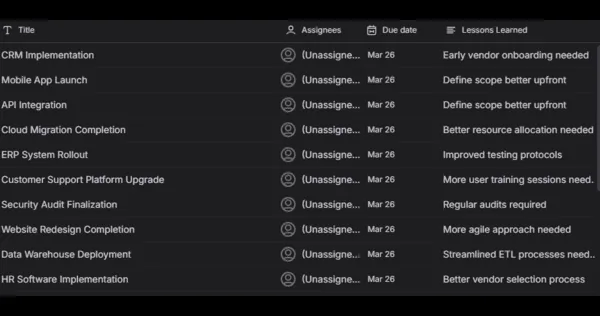
Project closure report: Unlock valuable insights with every completed project
Learn how a well-structured project closure report can boost project outcomes. Follow our checklist to capture insights, improve processes, and drive success.
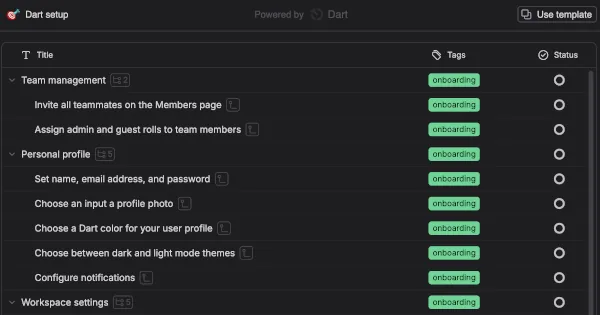
Dart setup template
How to set up Dart and make sure you're on track during the onboarding phase.
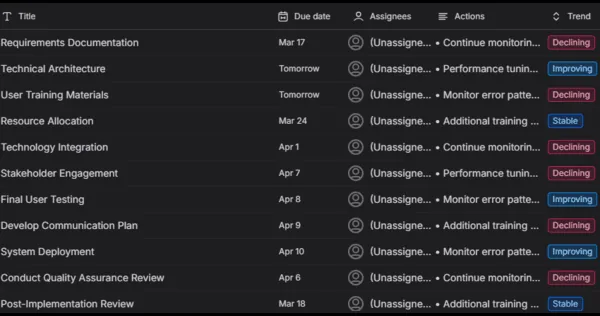
Project go-live template: Your go-to resource for stress-free implementation
Achieve flawless execution with our Project Go-Live Template. Streamline your project launch, minimize risks, and ensure a smooth, stress-free rollout!
Build your agent workplace with Dart
Bring AI-powered efficiency to your team's project management
Get started for freeNo credit card required
